Margot essays
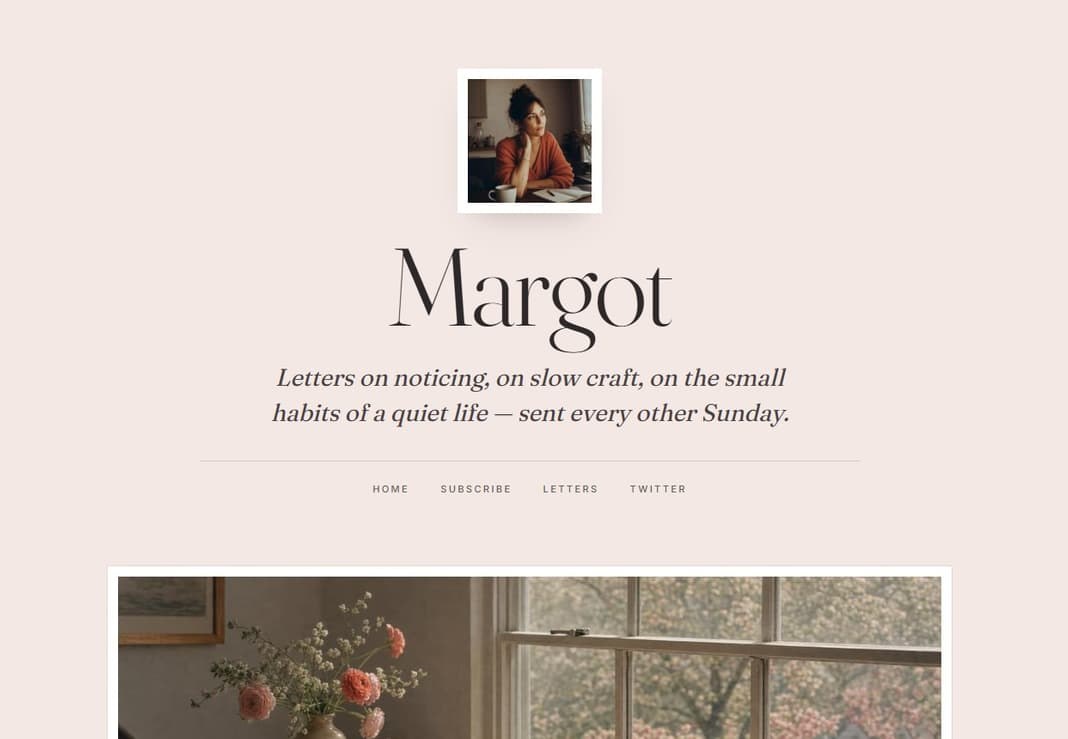
A light-first single-author essay blog. Warm cream paper, muted coral accent, Fraunces display over Inter body. Ships with a portrait-led hero, a featured letter, a recent grid, a paginated-style archive, and full long-form article pages with a lightweight markdown renderer. Built for writers, essayists, and personal newsletters.
by Mythos·0 remixes
Key Highlights
Portrait-led editorial hero
A framed author portrait, an oversized Fraunces wordmark, a tagline, and small-caps nav set the tone on every page.
Featured, recent, and archive
A wide letterbox featured letter, a two-column recent grid, and a denser four-column archive grid of older posts.
Long-form article pages
Full essay pages render headings, paragraphs, and pullquotes from a tiny built-in markdown parser — no external library.
Warm cream and coral craft
Cream paper, charcoal ink, and a single muted-coral accent ramp, with Fraunces display over Inter body text.
Responsive and accessible
Mobile-first grids, focus-visible rings, semantic time tags, and a reduced-motion rule across the whole blog.
Features & Capabilities
Explore the pages, interactions, and starting content included in this template.
About this template
Margot essays is a light-first, single-author essay blog built for writers who want their words to carry the page. It opens with a framed author portrait and an oversized Fraunces wordmark, then leads readers down through a featured letter, a recent grid, and a deeper archive into full long-form article pages. Everything is static content in the project, so there is nothing to host or wire up before it reads beautifully.
The craft is in the restraint. The palette is warm cream paper with charcoal ink and a single muted-coral accent, set in Fraunces display over an Inter body. Covers sit in white tipped-in print cards with hairline borders and soft shadows, titles draw an underline on hover, and pullquotes are marked by a thin coral rule. The whole thing is mobile-first and quietly accessible: focus-visible rings, semantic time tags, decorative-image alt handling, and a reduced-motion rule throughout.
Who it's for
- Essayists and personal writers who publish long-form pieces
- Authors of a fortnightly or monthly newsletter
- Bloggers who want an editorial, print-inspired feel
- Writers moving off a heavy CMS to something they fully control
- Anyone who wants a calm, reading-first home for their words
What's included
- A home page with a portrait hero, a wide featured letter, a recent two-column grid, and a denser four-column archive grid
- Full article pages at /article/:slug with a cover, meta, long-form body, author sign-off, and a More letters section
- A lightweight built-in markdown renderer for paragraphs, headings, and coral pullquotes — no external library
- A centered subscribe section with a validated, simulated email form ready to wire to a provider
- A themed Lost letter 404 page and a three-column footer with a dynamic copyright year
- Thirteen complete essays as static content, each with its own cover image, date, and reading time
Best use cases
Personal essay blog
The portrait hero and reading-first article pages make this a natural home for a single voice. Replace the bio, swap the covers, and write your own letters into the posts file.
Fortnightly newsletter site
The Every other Sunday subscribe section and the cadence baked into the copy fit a recurring letter. Point the form at your email provider and use the site as the public archive of past issues.
Writer portfolio and archive
The featured, recent, and archive layers give a long backlog real depth on a single page, so returning readers can browse everything you have published without pagination plumbing.
Make it yours
1. Remix the template
Start from Margot essays in mythos.new and remix it — that forks the full project into your own private workspace, ready to edit immediately.
2. Customize your brand
In the in-browser IDE and chat, change the name, tagline, bio, and covers, recolor the coral accent or swap the fonts, and write your own essays into the posts. Ask in chat for layout or copy changes and watch the preview update live.
3. Publish
When it reads the way you want, publish to a <name>.r21.dev subdomain in one step. Your essay blog goes live as a fast static site, and you can rename or re-publish whenever you like.
Related Templates